You're diligently taking your vitamins, deep conditioning every week, barely touching the heat tools, and yet your hair just won't seem to grow. Sound familiar? Chances are, split ends are the culprit. But do split ends stop hair growth, or is that just another hair myth doing the rounds?
Let's set the record straight, and give you eight pro-approved secrets to prevent split ends for good.
What Are Split Ends and What Causes Them?
The technical term for split ends is trichoptilosis, a fancy way of describing what happens when the outer protective layer of a hair strand (the cuticle) breaks down, causing the end to fray and separate. You'll recognise them by the telltale "Y-shape" or "V-shape" at the tip of the strand, or a gradual feathering effect along the shaft.

Split ends are not a one-size-fits-all problem either. There are actually several types:
- Basic split ends: the classic two-pronged split
- Feather split ends: gradual splitting along the strand, resembling a feather
- Tree split ends: multiple branches extending from one break point
What causes them? At the root of almost every case is dryness. Well-hydrated hair simply doesn't split as easily. But a number of factors accelerate that dryness and damage:
- Heat styling; blow dryers, flat irons, and curling wands strip moisture from the hair shaft and weaken the cuticle
- Chemical treatments; colouring, bleaching, and relaxing alter the hair's internal structure, making it prone to cracking
- Mechanical stress; aggressive brushing, especially on wet hair, rough towel drying, and tight hair ties all cause physical damage
- Environmental factors; UV exposure, pollution, cold weather, and humidity all wear down the cuticle over time
- Product build-up or harsh formulas, sulphates and heavy chemicals strip the hair of its natural protective lipids
Here's a perspective that resonates with anyone who's ever Googled this: people often wonder why split ends are even a problem when your hair grows from the root, not the ends. The answer is that while your roots are perfectly fine, the damage at the tips has a knock-on effect that prevents you from ever seeing that growth, and that's what makes split ends so frustrating.
Do Split Ends Stop Hair Growth?
Here's the honest answer: no, split ends do not directly stop hair growth. Your hair grows from follicles in your scalp, and what's happening at the tips has zero influence on that process. On average, hair grows around half an inch per month, and split ends don't change that rate.
But, and this is a big but, split ends absolutely sabotage your length.
Think of it like filling a bucket that has a hole in the bottom. The water (your new growth) keeps coming in, but it's draining out just as fast. When split ends are left untreated, the damaged ends become brittle and snap off. Your hair is technically growing, but it's breaking at roughly the same speed, creating the illusion that your hair is stuck at the same length.
The damage doesn't stay put, either. As a Reddit commenter, whose mother has been a stylist for over 30 years, explained: "The splits don't remain at the end of your hair. They travel up and cause breakage all along the strand."

Left untreated, splits travel up the hair shaft, meaning you lose more length and the hair becomes increasingly fragile throughout. That's why what starts as a small split at the tip can eventually mean losing several inches of otherwise healthy hair.
So while the answer to "do split ends stop hair growth?" is technically no, the practical reality is that split ends make it feel impossible to grow your hair longer. That's why addressing them matters.
Impact of Split Ends on Hair Health
Split ends are more than a cosmetic inconvenience. Here's what they're doing to your hair:

Weakening the hair shaft. Once the cuticle is compromised, the inner cortex of the hair strand is exposed. As one Reddit user put it simply: "Split ends cause the hair to be more fragile and prone to breakage."

Causing visible thinning at the ends. Split ends make the tips of your hair look wispy and uneven. Even if your overall hair density is healthy, damaged ends drag down the appearance of the whole length.
Creating a cycle of breakage. Breakage causes split ends; split ends cause more breakage. Without intervention, this cycle is self-perpetuating. Your hair ends up looking shorter, thinner, and drier than it truly is.
Making hair harder to manage. Damaged hair tangles more easily, which leads to more aggressive detangling, which causes more breakage. It's a frustrating loop that's hard to escape without addressing the root cause.
The comparison between split ends vs healthy ends is stark. Healthy ends are smooth, uniform in width, and reflect light, giving hair that glossy, polished look. Split ends, on the other hand, are rough, uneven, and absorb light rather than reflect it, leaving hair looking dull and dry.
Does Cutting Dead Ends Help Hair Grow?
This is one of the most common questions in the hair care world, and the answer is yes, but not in the way you might think.
Trimming your ends does not make your hair grow faster. Growth speed is determined by genetics, age, hormones, and scalp health, not what happens at the tips. However, cutting dead ends absolutely helps your hair retain the length it's already growing.
Here's why: when you remove split ends before they travel up the shaft, you stop the cycle of breakage. Your new growth has a chance to stick around instead of snapping off. Over months, this makes a dramatic difference to the length you're able to keep.
The key is how much you trim. You don't need to sacrifice significant length to reap the benefits. Options include:
- Micro trims; just 1/8 of an inch removed, enough to clear split ends while keeping as much length as possible
- Dusting; a light cut that removes only the very tip of each strand where splits are just beginning
- Regular trims every 8–12 weeks; often the most effective way to stay ahead of damage without losing substantial length
If you've been avoiding the scissors out of fear of losing progress, a micro trim is your best friend. The small snip now means you protect every inch of growth going forward.
Preventing and Treating Split Ends
Once a hair strand has split, it cannot be permanently repaired, products can temporarily smooth and seal the appearance of splits, but they won't fuse the hair back together. That's why prevention is everything. Here are eight pro secrets for keeping split ends at bay.
1. Build a Proper Hair Care Routine
A consistent, moisture-focused routine is the single most effective defence against split ends. This means:
- Washing with a sulphate-free shampoo to cleanse without stripping the hair's natural oils
- Always following with conditioner to seal in moisture and smooth the cuticle
- Using a deep conditioning mask at least once a week, especially if your hair is colour-treated, heat-styled, or naturally dry
- Applying a leave-in conditioner to maintain hydration between washes
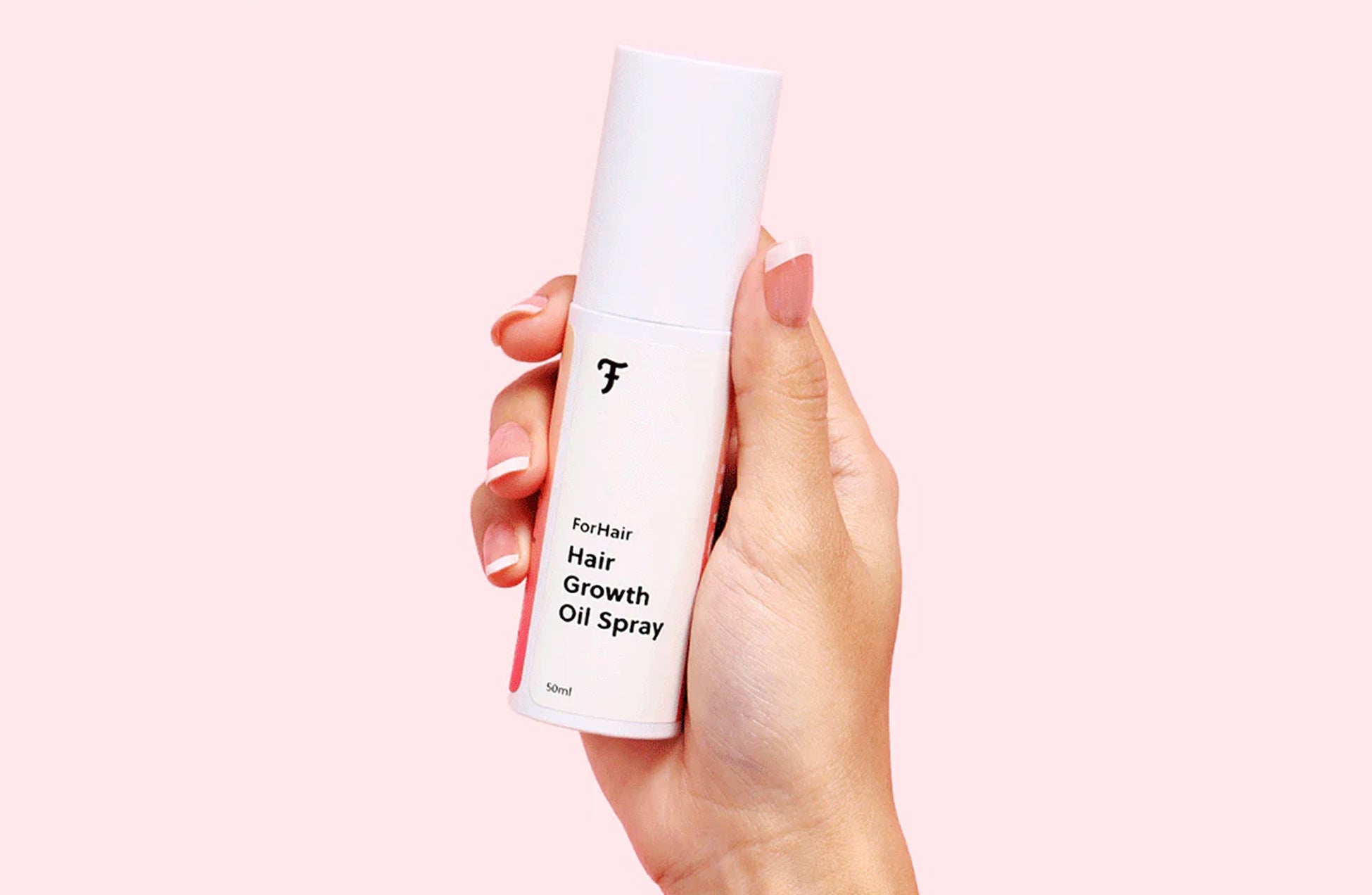
- Scalp massage increases blood flow to the follicles, enhancing the delivery of nutrients and oxygen to growing hair. For best results, try massaging with a dedicated Hair Growth Oil Spray, the spray format makes it easy to apply directly to the scalp, ensuring the nourishing ingredients get exactly where they're needed most
The goal is simple: keep your hair moisturised. Dry, brittle hair splits. Hydrated hair bends.
2. Avoid Excessive Heat Styling
Heat is one of the fastest routes to split ends. High temperatures remove moisture from the hair shaft and degrade the protein bonds that give hair its strength.
That doesn't mean you have to give up your tools entirely, but it does mean being strategic:
- Always use a heat protectant before applying any heat tool. Look for formulas containing silicones or ceramides that create a physical barrier between your hair and the heat source
- Lower the temperature, most styling goals can be achieved below 180°C (350°F)
- Give your hair rest days, letting your hair air dry two or three times a week makes a noticeable difference in the long run
- Pat dry rather than rub when towel-drying. A microfibre towel creates far less friction than a standard cotton towel and significantly reduces breakage
3. Get Regular Trims
We've said it once but it bears repeating: regular trims are the gold standard of split end prevention. Aim to trim every 8–12 weeks. If you're actively trying to grow your hair, ask your stylist for a micro trim or a light dusting, just enough to remove the damaged tips without sacrificing length.
A word on tools: if you trim at home, only use scissors designed specifically for hair. Dull or craft scissors microscopically fray the hair shaft as they cut, which actually creates split ends rather than fixing them. Sharp, hair-specific scissors are non-negotiable.
Some salons also offer hot thermal scissors, a technique that seals the ends as they cut. It's a more expensive option, but it provides maximum protection against future splitting.
4. Be Gentle When Detangling
Wet hair is at its most vulnerable. Brushing wet strands can stretch and snap the shaft, leaving it weakened and prone to splitting. Instead:
- Use a wide-toothed comb or a wet brush on damp hair
- Always start detangling from the ends, working your way up to the roots, never the other way around
- For added slip and protection, detangle with a leave-in conditioner or a few drops of hair oil applied first
5. Protect Your Hair at Night
Friction from a cotton pillowcase works against your hair every single night. The fibres catch and pull at your strands while you sleep, leading to breakage and frizz over time.
The solution is simple: switch to a silk or satin pillowcase. Alternatively, loosely wrap your hair in a silk scarf or bonnet before bed. This small change can make a significant difference to both split ends and overall hair health.
6. Choose Hair Accessories Wisely
Metal clips and tight elastic hair ties are surprisingly damaging, they snag the hair, pull at the cuticle, and create weak points that lead to breakage. Opt for:
- Spiral or coil hair ties that distribute pressure more evenly
- Fabric-covered elastics without metal joins
- Satin scrunchies for gentler hold with minimal friction
Protective styles like loose braids or buns can also help by keeping the ends tucked away and shielded from environmental stress.
7. Nourish From the Inside Out
Hair is made largely of a protein called keratin, and its health reflects what's going on internally. To support strong, resilient strands:
- Eat enough protein, eggs, fish, lean meat, legumes, and nuts are excellent sources
- Stay hydrated, dehydration affects every cell in the body, including hair follicles
- Consider a hair supplement that includes biotin, vitamin D, zinc, and iron, all of which support the hair growth cycle
8. Choose the Right Products for Split-End Prevention
Not all hair products are created equal. When shopping for products aimed at preventing split ends, look for:
- Bond-building treatments (like those containing ingredients such as maleic acid or bis-aminopropyl diglycol dimaleate) that work to reinforce the internal structure of the hair
- Protein treatments used occasionally to rebuild strength in damaged or over-processed hair
- Hydrating hair oils, argan oil, marula oil, and jojoba oil help smooth the cuticle and lock in moisture without build-up
- UV protectant sprays or leave-ins if you spend significant time outdoors, sun damage is a real and underappreciated cause of split ends
Avoid products with high concentrations of alcohol (look out for terms like isopropyl alcohol or alcohol denat in the first few ingredients), which dry out the hair shaft over time.
FAQ
Can hair still grow if you have split ends?
Yes. Hair grows from the follicles in your scalp, and split ends have no direct effect on that process. Your hair is still growing at its normal rate, roughly half an inch per month, regardless of what's happening at the tips. The problem is that damaged ends are prone to breakage, so new growth snaps off before you get the chance to see or feel it. The goal isn't to grow the hair faster; it's to stop the breakage so the growth you already have can stick around.
What happens if you don't cut your split ends?
Left untrimmed, split ends will continue to travel up the hair shaft, causing damage to progress higher and higher. What starts as a small fray at the tip can eventually compromise several inches of otherwise healthy hair. Over time, you'll notice your hair becoming increasingly dry, tangled, and unmanageable, with a wispy, thin appearance at the ends. The longer you leave it, the more length you'll ultimately have to remove when you finally do trim, so a little and often is always the smarter strategy.
How fast do split ends reduce hair growth?
Split ends don't reduce the rate of hair growth, your follicles keep working on their own schedule. What they reduce is your length retention. In the worst cases, if breakage is happening as fast as growth, your hair can appear completely static for months. Regular trimming, consistent moisture, and reducing damage are the most effective way to close that gap and start seeing real progress in your length.