You're standing in front of the mirror, scanning those little short hairs sprouting around your hairline, and the big question hits: Is this new growth finally coming in or is my hair breaking off?
It's one of the most confusing things about a hair care journey, and you're definitely not alone in asking it. The good news? Once you know exactly what to look for, the difference becomes surprisingly easy to spot. Let's break it all down.
What's the Difference Between New Hair Growth and Breakage?
At first glance, both new hair growth and hair breakage can look pretty similar, short, fine-ish strands scattered around your scalp. But they're telling completely different stories about your hair's health.
New hair growth means your follicles are actively doing their job. Fresh strands are emerging from the scalp, working their way through the natural growth cycle. These are baby hairs; soft, tapered, and full of potential.
Hair breakage, on the other hand, means existing strands have snapped somewhere along the shaft. They're not new hairs at all, they're the shorter remains of longer ones that couldn't hold up under stress, dryness, or damage.
The reason it matters so much to tell them apart is because each situation calls for a completely different response. If it's new growth, you want to protect and nurture those fragile new strands. If it's breakage, you need to figure out what's causing the damage and stop it before it gets worse.
How to Identify New Hair Growth?
If you've ever gone down a rabbit hole on Reddit looking for answers, you've probably seen threads exactly like these, real people posting photos of their hair and genuinely not knowing what they're looking at.
In one Reddit discussion in r/Haircare, a user with fine, thin hair shared that after months of focusing on haircare and scalp massages, they started noticing short hairs on top of their head and couldn't tell whether they were seeing new growth or breakage.

Caption: Screenshot from a Reddit discussion about identifying new hair growth vs breakage.
Sound familiar? This confusion is genuinely one of the most common hair questions out there and the answer almost always comes down to a few specific things you can check right now. Here are the clearest signs that what you're seeing is actually fresh growth, not damage.
Texture and Color
New hair tends to feel noticeably soft and fine, almost like baby hair (because it is). It hasn't been through heat styling, chemical processing, or environmental stress yet, so it's in its most natural, delicate state. Run a strand between your fingers, if it feels silky and flexible rather than rough or brittle, that's a great sign.
Color-wise, new growth will typically match your natural hair color. If you dye your hair, those fresh strands will come in as your roots, standing out from the rest of your colored lengths. That contrast isn't a problem, it's proof your follicles are working.
Hair Length
New hairs grow consistently longer over time. If you notice those short strands are gradually getting longer week by week, particularly around the hairline, temples, or the crown, you're looking at growth. Breakage, by contrast, tends to stay short and static because the hair keeps snapping before it can reach any significant length.
Monitor Hair Shedding
A certain amount of daily shedding is completely normal, most people lose anywhere from 50 to 100 strands a day as part of the natural hair cycle. The concern is when shedding increases noticeably, or when you're finding lots of short strands (not full-length hairs with a root bulb) on your pillow, in your brush, or in the shower drain. Lots of short, rootless strands = breakage. Longer strands with a small bulb at the root = normal shedding.
Compare Before and After Photos
This is genuinely one of the most underrated tools for tracking hair health. Take a photo of your hairline and crown once a month in consistent lighting. Over time, you'll be able to see whether those short hairs are getting longer (growth!) or whether the overall density is thinning and short hairs are multiplying without lengthening (breakage).
How to Identify Hair Breakage?
Now for the other side. Here's how to recognize that what you're dealing with is breakage rather than regrowth.
Examine the Hair Ends
This is the single best way to tell the difference. Pull out one of those short strands and look closely at the tip. New growth has a naturally tapered end, thin and pointed, growing narrower toward the tip, just the way hair emerges from a follicle.
Breakage is the opposite. The ends will look blunt or jagged, sometimes frayed or split. You might even notice a tiny light-colored dot at the tip, that's where the strand snapped. No tapering, just a clean or rough break.
Look for Uneven Length
Take a look at the overall shape of your hair. If you've got sections that are noticeably shorter than the rest, particularly around the crown, along the part line, or at the nape of the neck, without any intentional cut, that unevenness is usually a sign of breakage. It tends to cluster in the areas that take the most styling abuse: where you clip, tie, heat, or sleep on your hair most.
Monitor Hair Volume
Have you noticed your ponytail feels thinner than it used to? Or that your hair just doesn't have the same body it once did? Gradual volume loss is often a quiet signal that breakage is happening faster than growth. The individual strands are getting shorter, which reduces the overall fullness, even if the number of follicles is unchanged.
Common Causes of Breakage
Understanding why breakage happens makes it a lot easier to prevent. Some of the most common culprits:
- Heat styling: Blow dryers, flat irons, and curling wands above 180°C can permanently alter the structure of keratin proteins in your hair. Once heat-damaged, hair can't repair itself, it can only grow out.
- Chemical treatments: Bleaching, perming, and frequent coloring strip away the hair's natural protective layer, leaving strands brittle and porous.
- Tight hairstyles: Ponytails, buns, and braids that pull on the hair shaft create constant tension, which weakens strands over time, especially around the hairline.
- Rough handling: Rubbing wet hair with a towel, brushing aggressively, or using elastic hair ties all create friction that can cause strands to snap.
- Nutritional gaps: Hair is a fast-growing tissue that needs a steady supply of protein, iron, zinc, biotin, and vitamin D. When the body is running low on any of these, it deprioritizes hair: which shows up as weaker, more breakage-prone strands.
- Stress: Elevated cortisol can push hair follicles into a resting phase prematurely, resulting in strands that grow in finer and more fragile, and therefore more likely to break.
- Dryness: Hair that lacks moisture becomes brittle. This can be caused by low-humidity environments, over-washing, skipping conditioner, or just not giving your hair enough hydration.
How Can You Avoid Hair Breakage?
Prevention is so much easier than recovery, and most of the steps are simpler than you'd think.
Be gentler with your styling routine. Let your hair air dry when you can, and when you do use heat tools, always apply a heat protectant first. Try to keep hot tools on lower settings and limit how often you use them.
Rethink your hair ties. Swap tight elastics for silk scrunchies or loose, snag-free bands. Give your hair a break from high ponytails and updos a few days a week.
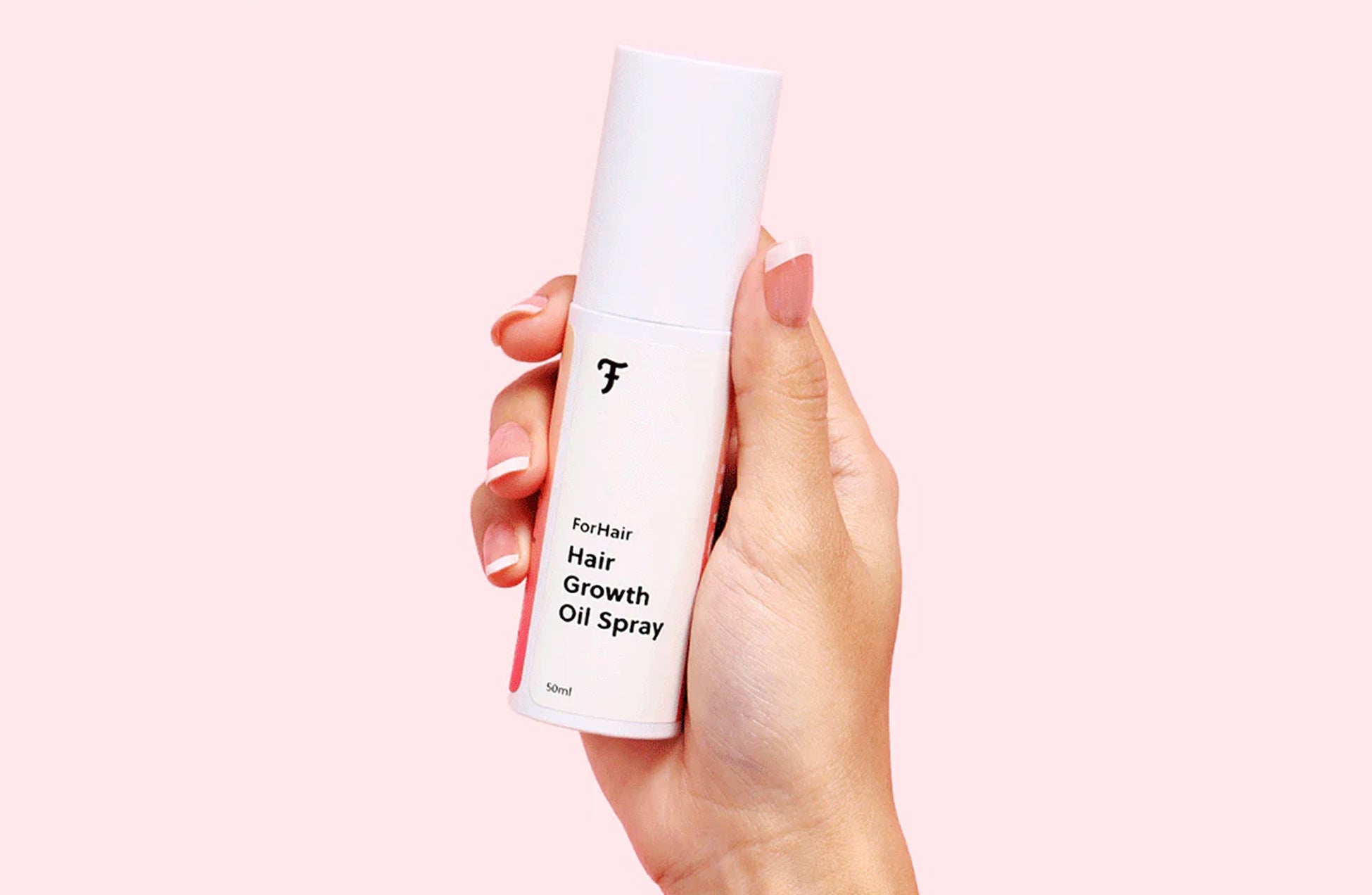
Focus on scalp health. Healthy hair starts at the root, literally. A nourished scalp creates the optimal environment for strong, resilient strands. Regular scalp massage improves circulation, which helps deliver nutrients to your follicles. If you want to add something to your routine that works directly at that level, the ForChics Hair Growth Oil Spray is an easy, non-greasy option, just spray it onto the scalp to nourish follicles and support healthy growth without any heavy residue.
Eat for your hair. Protein, leafy greens, fatty fish, eggs, nuts, and seeds all feed your follicles from the inside. If you suspect a nutritional gap, it's worth checking in with your doctor.
Get regular trims. It feels counterintuitive when you're trying to grow your hair, but trimming away split ends prevents the damage from traveling further up the shaft, which actually protects your length over time.
Switch to a silk or satin pillowcase. The friction from cotton can cause significant breakage overnight. It's a small change that makes a real difference.
New Hair Growth vs Breakage: Side-by-Side Comparison
| Feature | New Hair Growth | Hair Breakage |
|---|---|---|
| Tip/end shape | Tapered, pointed | Blunt, jagged, or split |
| Texture | Soft, smooth, flexible | Rough, coarse, or frizzy |
| Location | Hairline, temples, crown | Anywhere, especially areas of styling stress |
| Length over time | Gradually gets longer | Stays short or uneven |
| Color | Matches natural root color | Matches (or lighter at the break point) |
| How it feels | Silky, fine | Dry, stiff |
| Volume effect | Adds density over time | Reduces overall fullness |
Conclusion
Learning to read your hair is honestly one of the most empowering things you can do for it. Once you know the difference between new growth and breakage, you stop guessing and start responding to what your hair actually needs.
The short version: soft, tapered, gradually-lengthening strands = new growth. Blunt, rough, static, scattered short pieces = breakage. When in doubt, look at the ends.
If you're in a breakage phase right now, don't panic, it's fixable. Start with the gentlest changes first (less heat, more moisture, scalp care) and be patient. Hair works on its own timeline, but it responds really well to consistent, thoughtful care.
FAQ
Can high cortisol cause hair breakage?
Yes, and more than most people realize. Elevated cortisol, the body's primary stress hormone, can disrupt the normal hair growth cycle by pushing follicles into a resting phase too early. When follicles prematurely rest, the strands that grow in afterward tend to be finer and weaker than usual, making them more susceptible to everyday breakage. Chronic stress can also worsen scalp inflammation and reduce the nutrient supply to follicles, compounding the problem over time.
Can lupus cause hair breakage?
Yes. Lupus is an autoimmune condition that can affect the scalp and hair follicles directly. People with lupus may experience patchy hair loss, increased shedding, or increased fragility and breakage, particularly during flares. The medications used to treat lupus can also impact hair health. If you're noticing significant hair changes alongside other symptoms, it's worth bringing up with your doctor.
Does estrogen make hair grow?
Estrogen plays a significant role in the hair growth cycle. Higher estrogen levels are associated with longer growth phases, which is why many people notice their hair feels thicker and healthier during pregnancy (a high-estrogen period). When estrogen drops, such as postpartum, during perimenopause, or with certain hormonal conditions, hair can thin, shed more, and become more prone to breakage. This is a well-recognized hormonal pattern, not just anecdotal.
What actually stimulates hair growth?
Hair growth is stimulated at the follicle level. Key factors include good scalp circulation (which brings oxygen and nutrients to the follicle), a nutrient-rich diet (especially protein, iron, zinc, biotin, and vitamin D), and keeping follicles in their active growth phase as long as possible. Scalp massage has been shown to support circulation, and certain topical ingredients, like rosemary extract, castor oil, and peptides, are associated with supporting follicle activity. Minimizing stress, sleeping enough, and avoiding scalp inflammation all contribute too.
What are the first signs of hair regrowth?
The earliest signs are small, fine, soft strands appearing near the scalp, often called "baby hairs." You might notice them first as tiny dark dots on the scalp (follicles beginning to push hair through the skin), which then develop into short, tapered hairs around the hairline or part. These new strands feel noticeably softer than your existing hair. Over several weeks, they'll begin to lengthen, and that gradual lengthening is your clearest confirmation that you're seeing growth, not breakage.